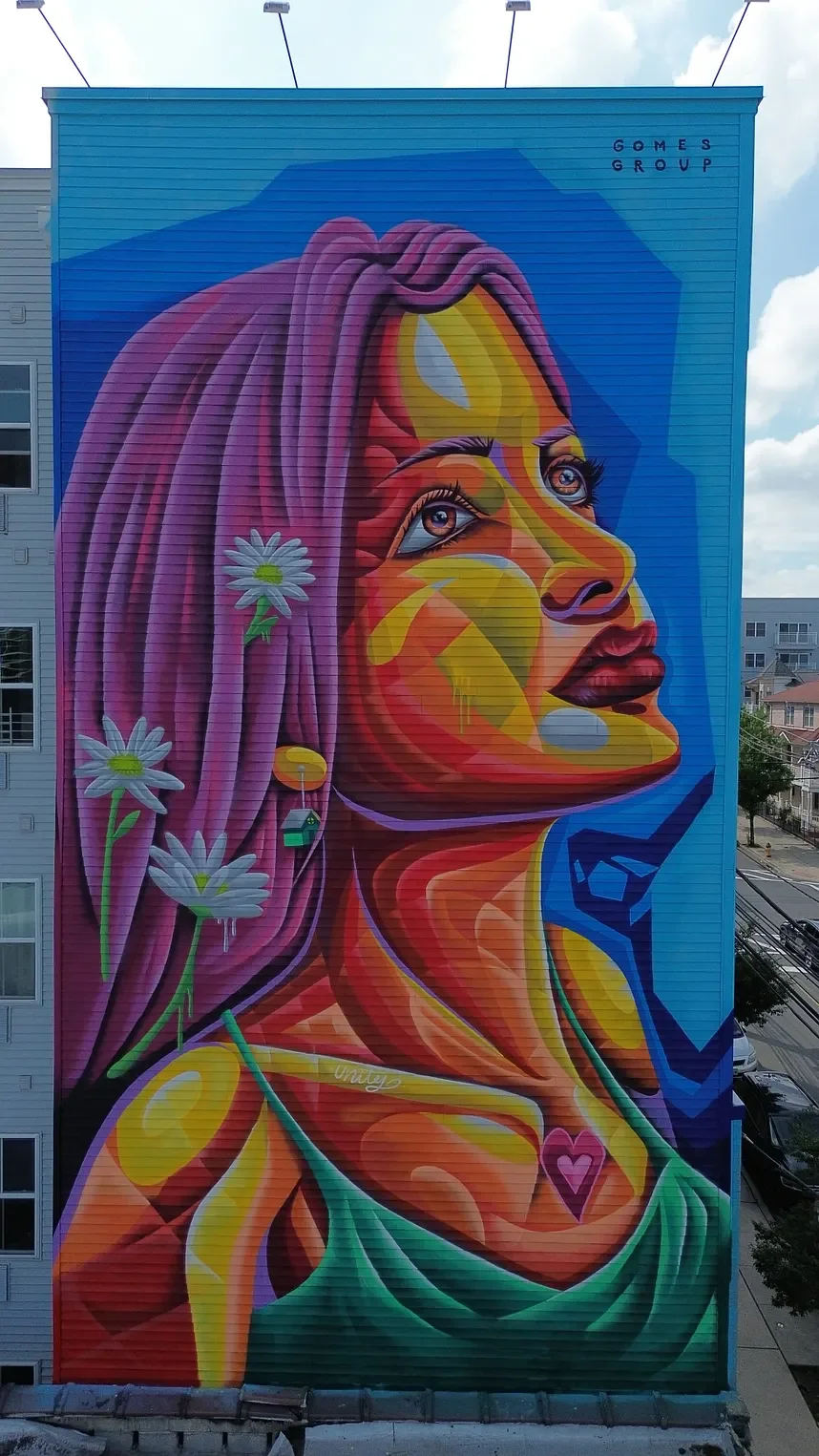
Unity: Where Art, Architecture, and Community Meet in Newark
n the evolving landscape of Newark, a new visual landmark has emerged—one that doesn’t just occupy space, but transforms it.
Unity is a large-scale mural rising over 30 feet tall, portraying a female figure that symbolizes connection across different worlds. Located in the Novu District, the piece stands as more than public art—it’s a statement about how cities can be shaped not only by buildings, but by the ideas and people behind them.
Seeing Space Differently
We move through spaces every day—streets, developments, buildings—often without thinking twice about them.
But when creativity enters those same spaces, something shifts.
Unity invites a different way of seeing. It reframes its surroundings, turning a vertical surface into a moment of reflection—where architecture is no longer just functional, but emotional.
Where Worlds Intersect
At its core, Unity represents a meeting point between disciplines that don’t always cross paths:
Real estate and art
Structure and expression
Business and community
These worlds often operate independently. But when they come together, they have the potential to reshape how a place is experienced.
The mural makes that intersection visible. It shows how development can become more human, how art can anchor identity, and how neighborhoods can gain depth through creative presence.
Humanizing Scale
Led by artist @raef.arte, Unity transforms the scale of the space into something deeply human.
A wall over 30 feet tall could feel distant or imposing. Instead, the figure creates a sense of connection—bringing emotion into scale and presence into structure.
There’s a balance here between size and intimacy, between the physical and the expressive. The result is a piece that doesn’t just stand tall, but resonates with the community around it.
Beyond the Surface
Projects like Unity are part of a broader exploration:
What happens when art becomes part of the environment, rather than an afterthought?
In Newark, that question is beginning to take shape. Public art is no longer decorative—it’s becoming integral. It reflects identity, builds connection, and transforms everyday spaces into shared experiences.